
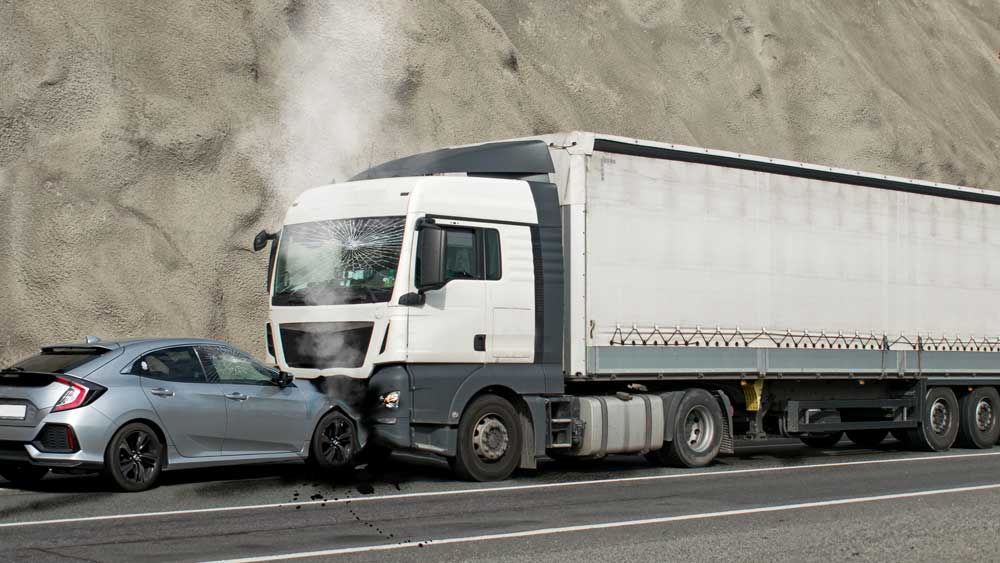
What Triggers Employer Liability in an NC Truck Accident Claim
Though a commercial driver error can cause a trucking accident, the financial and legal responsibility may not fall on the individual behind the wheel. A commercial vehicle crash may involve a larger pattern of unsafe hiring, poor training, weak supervision, or improper procedures or management that can make an employer, trucking company, contractor, or loading crew also partly responsible. Many of these instances fall outside of an individual employee’s responsibility and introduce corporate accountability.
Liability in a truck accident claim may extend to an employer based on an individual’s work status, and when negligent company practices or policies contributed. In serious crashes, the key question should address what the driver did wrong and which companies failed to reduce the risk.
Legal Terms Related to Employer Liability
North Carolina recognizes employer liability through legal doctrines and direct negligence theories related to hiring, retention, and supervision. Here is what those terms mean for commercial crash claims:
- Vicarious Liability: This broad principle permits someone to be held legally and financially responsible for the negligent actions of another.
- Respondeat Superior: This doctrine is a type of vicarious liability that applies to the employer/employee relationship, holding an entity liable for an individual’s wrongful acts.
- Negligence: The basis for legal claims in which an employer’s faulty screening, training, or supervision contributed to a trucking accident.
Why Employer Liability Matters in Trucking Accidents
Commercial policies may provide more meaningful coverage for recovery than an individual driver’s personal insurance due to corporate policy limits and multiple potential defendants. These factors may create multiple paths to recovery and a larger threshold for damage recognition.
Shifting liability in commercial truck accidents to the trucking company versus the driver can change the case from an operator’s mistake to a company allowing or causing the danger, supporting negligence theories.
The companies facing accountability put up strong legal defenses to avoid profit loss and reputational harm, especially in wrongful death cases. The best truck accident attorneys for complex liability cases know how to investigate denials and litigate against CDL drivers or employers to demonstrate how institutional or individual safety failures put people at risk.
Vicarious Liability and Respondeat Superior in Commercial Truck Accidents
Any relationship involving supervisory control may be governed by vicarious liability principles but, for respondeat superior to apply, the scope of employment typically must meet certain criteria. A central question is whether the driver was doing work for the employer’s benefit at the time of the crash, such as:
- Delivering goods
- Driving between job sites
- Transporting equipment
- Making scheduled pickups
- Driving a company vehicle for an assigned task
- Responding to dispatch instructions
If the driver was running a personal errand, commuting home, or making an unauthorized detour, the employer may argue that the driver was outside the scope of employment and their individual insurance, not the corporate policy, should cover the crash.
These cases require investigation as several of these circumstances may qualify as ‘for the employer’s benefit’ depending on specific facts.
Direct Employer Negligence: When the Company’s Own Conduct Caused the Crash
Employer negligence is different than vicarious liability in commercial truck accidents. Here, the company is not only responsible because of the driver—it may be responsible because its own decisions created the risk.
North Carolina negligence claims for semi-truck accidents generally require proof of an employee’s negligent act, and how the employer’s negligent hiring, retention, or supervision contributed.
Negligent Hiring
A company may be liable for an accident involving an unqualified driver if the business’s hiring practices were negligent, meaning they employed a driver despite warning signs that the person was unfit. Examples of ignored warning signs that could lead to liability include:
- Poor driving history
- Prior crashes
- Suspended or improper license
- Drug or alcohol concerns
- Lack of required experience
- Failure to verify qualifications
Negligent Training
An employer’s failure to adequately instruct a driver who causes a crash could face liability in certain situations. Generally, the lack of training needs to render the employee incompetent, unfit, or dangerous, which may result from improper instruction on:
- Safe vehicle operation or backing procedures
- Cargo handling procedures
- Fatigue management and hours-of-service compliance
- Incident reporting procedures
- Procedures for hazardous weather, road construction, or heavy traffic
- What to do after a crash, breakdown, or safety emergency
Negligent Supervision or Retention
If a company ignores warning signs and allows a potentially unsafe driver to keep operating a commercial vehicle, it may be liable if that failure to supervise or retrain the driver contributes to a crash.
For a claim, you must show the company failed its duty to take reasonable action by reviewing the complaint, investigating prior crashes or violations, monitoring hours-of-service compliance, or enforcing drug and alcohol policies, or ignored safety-sensitive duties.
Negligent Entrustment
This legal theory may apply when an employer gives vehicle access to a driver who is unqualified, impaired, or improperly licensed to operate the vehicle. For these circumstances, the employer must have known or reasonably should have known that the driver posed a danger and should not have been allowed to operate a company vehicle.
How Federal Trucking Regulations Affect Employer Liability
The Federal Motor Carrier Safety Administration (FMCSA) is a specialized division within the Department of Transportation tasked with regulating and enforcing commercial trucking rules. Federal standards set the minimum requirements for a commercial vehicle operation and can help establish actions that qualify as unsafe operation or negligent company practices or policies.
The FMCSA governs qualifications, training, and statutory requirements to enforce strict operational standards. Non-compliance can result in liability in commercial truck accidents for the trucking company versus the driver, or shared responsibility.
What Records Can Prove Employer Negligence in a Commercial Vehicle Crash?
Federal compliance requires motor carriers to maintain many records that can help prove employer negligence in a crash. Some examples of documentation that may prove helpful are:
- Driver qualifications (from employment applications)
- Motor vehicle records
- Road test certificates or equivalents
- Annual driving record reviews
- Medical certification records
- Dispatch logs
The trouble for victims of these crashes is that digital evidence and company records often require legal action to be obtained.
Liability for Crashes Involving Independent Contractors
Liability can become more complicated when a driver is labeled as an independent contractor instead of an employee, but this doesn’t absolve the trucking company’s liability. Under federal law, an independent contractor hauling freight under a company’s authority is generally considered an employee for the carrier, even if only temporarily. The FMCSA defines “employee” in its statutory employment rule which reduces legal liability friction and makes it more challenging for companies to shield themselves behind a driver’s employment status.
When Multiple Companies Can Share Liability for One Crash
Any party that contributed to a crash, including one company or multiple, can share liability for a single incident and be held accountable for their role. When vicarious liability and respondeat superior principles apply, a company—a fleet owner, repair shop, or loading dock—may also share liability when an employee’s actions introduce risks that contributed to the crash.
Proving repair, logistics, or load crew liability in truck accidents requires thorough investigation to examine sources of non-compliance and safety failures. The individual employee’s label is not always decisive. The best truck accident attorneys for complex liability cases understand how to reveal facts that support liability for a variety of entities to potentially maximize a claim.
Sources of Liability in a North Carolina Commercial Vehicle Crash
Some possible sources, potential circumstances, and evidence that may help are outlined below.
| Potential Liable Party | Contributing factors / liability signals | Evidence examples |
|---|---|---|
| Employer or motor carrier | The company failed to hire, train, supervise, or retain the driver safely | Driver qualification file, personnel file, motor vehicle records, training records, safety policies, dispatch logs |
| Delivery company | The assignments, routes, systems, and driver were under company control | Delivery app data, route logs, dispatch messages, vehicle assignment records, branding evidence |
| Broker or logistics company | The company negligently selected an unsafe carrier or had operational control over the shipment | Carrier vetting records, contracts, safety rating checks, load communications |
| Vehicle or trailer owner | The owner allowed the use of unsafe equipment or failed to address known mechanical issues | Ownership records, inspection records, maintenance logs, repair invoices |
| Maintenance provider | Faulty repairs, missed inspections, or poor maintenance | Records for repair orders, inspections, or mechanic notes |
| Load crew or warehouse | Improper loading, overweight cargo, unsecured freight, or poor weight distribution | Bills of lading, loading records, cargo weight tickets, dock footage, seal records |
| Manufacturer or parts supplier | A defective truck part, tire, component, underride guard, or safety system | Product records, recall history, expert inspection, maintenance history |
Challenging Employer Defenses in Commercial Truck Accident Claims
In North Carolina, employers may try to shift blame to take advantage of the strict contributory negligence laws and escape financial responsibility. Many defenses may focus on what you might have done wrong or your actions, and they might also deny negligence on the part of the company.
Semi-truck companies may argue against responsibility using the driver’s status, actions, or scope of employment as an excuse. These companies may also allege that they didn’t know or didn’t have a reason to believe that a driver was unsafe or that their company’s training or hiring policies were inadequate.
Refuting these defenses requires deep investigations into company records, driver history, vehicle data, and business relationships. This investigation can reveal corporate decisions that are not obvious at the crash scene.
The best truck accident attorneys for complex liability cases often work to uncover whether the company ignored warning signs, pressured unsafe driving, failed to supervise the driver, skipped required inspections, or allowed unsafe cargo or equipment on the road. Attorneys can also gather evidence to support your assertion that you didn’t contribute to the crash to protect your right to compensation.
What This Means for Injured People in North Carolina
Because semi-truck crashes can result in catastrophic bodily or brain injuries and burdensome recoveries, exploring vicarious liability and respondeat superior may be necessary to find a path forward. Acting soon can prevent missing strict filing deadlines and preserve logbooks and other evidence before it’s overridden or altered.
A commercial crash claim may be stronger when the investigation looks beyond the driver and asks who else had the power to prevent the crash and failed to do so. Bringing safety risks to light can also help strengthen corporate accountability, revealing additional responsible parties and additional potential recovery sources.
Next Steps: Contact Miller Law Group
If you’ve been harmed in a semi-truck crash that may involve more faulty parties than the driver alone, contact the attorneys at Miller Law Group in Raleigh, NC, for an evaluation. We understand how trucking companies operate and are standing by to help you with your accident claim and recovery. We have your back!